
- The origin of electrolysis technology
The beginning of the story has to be told from a self-taught scientist, this scientist is Michael Faraday.
If you hear his name, you will surely think of the “Faraday Law of Electromagnetic Induction” that used high school physics to abuse you thousands of times! Yes, it’s him…
When Faraday served as Humphrey David’s assistant, he spent a lot of effort studying chlorine. In 1833, Faraday went through a series of experiments and found that when an electric current is applied to an aqueous solution of sodium chloride, chlorine can be obtained.
That is: 2NaCl+2H₂O = 2NaOH+H₂↑+Cl₂↑
On this basis, Faraday concluded Faraday’s law of electrolysis in 1834.
But at this time, he still couldn’t think of the actual effect of this set of electrolysis theory, so this concept was temporarily shelved. Later, other scientists also began to get involved in this concept (Nicholson and Grottos), but they found that this concept had no practical use, so the application of this subject was delayed.
It was not until after World War II that the Russians began to get involved in electrolysis technology.
Subsequently, the Japanese developed a keen interest in electrolysis technology. They cooperated with the Russians to produce the first batch of “electrolyzed water generators.”
- Electrode and electrolysis technology
The main body of the electrolyzed water preparation device is generally divided into electrodes, electrolyzers and membranes. Among them, the electrode is the most important component in the preparation device, and its performance largely determines the water quality, energy consumption and cost of the water maker.
In 1950, the Dutchman Henry Beer first published an article on titanium-based coating of titanium-a precious metal thin film, which opened a new era in the development of titanium electrodes.
In 1968, the RuO2-TiO2 coating research results were industrialized in the chlor-alkali plant of DeNora Company in Italy, and the electrode entered the era of titanium electrode. This oxide-coated anode is commercially called DSA (Dimensionally Stable Anode), also called Dimensionally Stable Anode. Since the industrialization of metal anodes, in terms of price and mechanical processing performance, most of the industry currently uses metal titanium as the substrate of the anode.
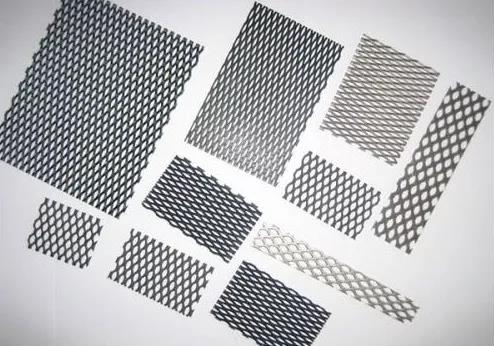
Twenty years ago, the electrodes used in water electrolysis equipment were mainly imported from abroad. After entering the 21st century, the entry of electrode manufacturers such as Mahneto (Suzhou) Special Anode Co., Ltd. has provided further support for the development of electrolyzed water technology.
- The history of the development of electrolyzed water in Japan
Before telling the history of the development of electrolyzed water in Japan, it is necessary to introduce the classification and corresponding functions of electrolyzed water.
Electrolyzed water classification
Acidic electrolyzed water: electrolyzed water with a pH value of 7.0 or less, the main functional component is hypochlorous acid (HClO), which is used for disinfection, and can also be subdivided into strong acid electrolyzed water/acidic electrolyzed water (pH2.0-3.0), micro Acidic electrolyzed water (pH5.0-6.5);
Alkaline electrolyzed water: pH is greater than 10.0, the main functional component is sodium hydroxide (NaOH), which can be used for decontamination;
Hydrogen water/hydrogen-rich water: There is no need to add electrolyte, the water is rich in hydrogen after electrolysis, which is mainly used for drinking.
Japan is the country with the earliest development of electrolysis water technology, and it is also the country with the most mature market.
Japan’s first electrolysis water generator was successfully developed in 1931. The main function of this electrolysis device is to change the pH of water for drinking.
Until 1954, the first civilian electrolysis device was successfully developed, mainly used in agricultural production;
Subsequently, electrolyzed water technology was introduced to South Korea in 1974 and to the United States in 1976;
Japan began to study strong acid water in 1982, and established the “Water Design Research Association” and “Water Science Research Association” in 1989, with more than 600 member companies, mainly researching the sterilization effect of strong acid water;
In 1993, the “Functional Water Research and Promotion Consortium” under the jurisdiction of the Ministry of Health and Welfare of Japan established a fund of about 500 million yen to focus on the application of strong acidic water in medicine and dentistry. Later, Japan developed and promoted the use of slightly acidic electrolyzed water.
At present, electrolyzed water has been widely used in Japan. It is currently mainly used in agriculture, food industry and medical industry. In agriculture, it is mainly used for breeding (disinfection of seeds), plant protection (replacement of some pesticides) and growth promotion (using strong alkaline electrolyte).
Acidic electrolyzed water was recognized as a food additive by the Japanese Ministry of Labor, Welfare and Welfare in 2002, opening the door for its application in food safety and hygiene! Currently in Japan, it is mainly used for fresh fruits and vegetables, sashimi dishes, food industry pretreatment and its appliances, machinery and equipment Cleaning and disinfection. Improving food quality with acidic electrolyzed water has become a new hot topic in the application research of acidic electrolyzed water in Japan!
Acidic electrolyzed water is mainly used in medical treatment for endoscopes, cleaning, disinfection, treatment of oral diseases and environmental disinfection.
- Electrolyzed water in China
my country began to set foot in the field of electrolyzed water in 1994, mainly introducing products and directions for the application of strong acid electrolyzed water in the medical field;
In 2002, the Ministry of Health issued the “Disinfection Technical Specifications”, stating that acidic electrolyzed water can be used for disinfection of tableware, fruits and vegetables, disinfection of the surface of objects, and washing and disinfection of endoscopes;
In December 2009, the Ministry of Health issued WS310.2-2009 “Hospital Disinfection Supply Center” Part 2 Cleaning, Disinfection and Sterilization Technical Operation Specification, pointing out that acidic electrolyzed water can be used for manual cleaning of stainless steel and other non-metallic instruments, appliances and Disinfection of items before sterilization;
In 2011, GB28234-2011 “Safety and Sanitation Standards for Acidic Oxidation Potential Water Generators” was published and implemented, which further regulated the design, manufacture and use of electrolyzed water equipment.
Since 2015, with the development of slightly acidic electrolyzed water technology and the continuous expansion of application fields, GB 28234-2011 “Safety and Sanitation Standards for Acidic Oxidation Potential Water Generators” has been revised, adding the “slightly acidic electrolyzed water equipment” According to the content of “Technical Requirements and Use”, the slightly acidic electrolyzed water technology has entered a period of rapid development, and the application of electrolyzed water has expanded from food, medical treatment and agriculture to public health, animal husbandry and other industries.
- Summary
It is worth noting that the domestic electrolyzed water market is gradually showing a trend of vigorous development. According to incomplete statistics, there are currently more than 100 domestic enterprises engaged in electrolyzed water technology. Imported products from the United States, Germany, Japan, and South Korea have also entered the market, and the application of electrolyzed water continues to expand. In addition, the combination of electrolyzed water technology and other technologies or equipment (such as vegetable washing machine, dishwasher, alkaline ionized water machine, hydrogen-rich water cup, hydrogen generator, hydrogen absorption machine, etc.), enters home life through a combined method , Is also becoming a new trend, all major home appliance companies are making efforts one after another, hoping to get a share of the market.